 LOOKSMAXXING
The Looksmaxxing Hierarchy: Every Method Ranked by What Actually Works
Somewhere around 90% of the visible improvement available to you comes from seven boring tiers nobody screenshots. The other 10% generates 90% of the content, the anxiety, and the spending. This page is the ranked map — impact, effort, and evidence for every tier — so you climb in the right order.
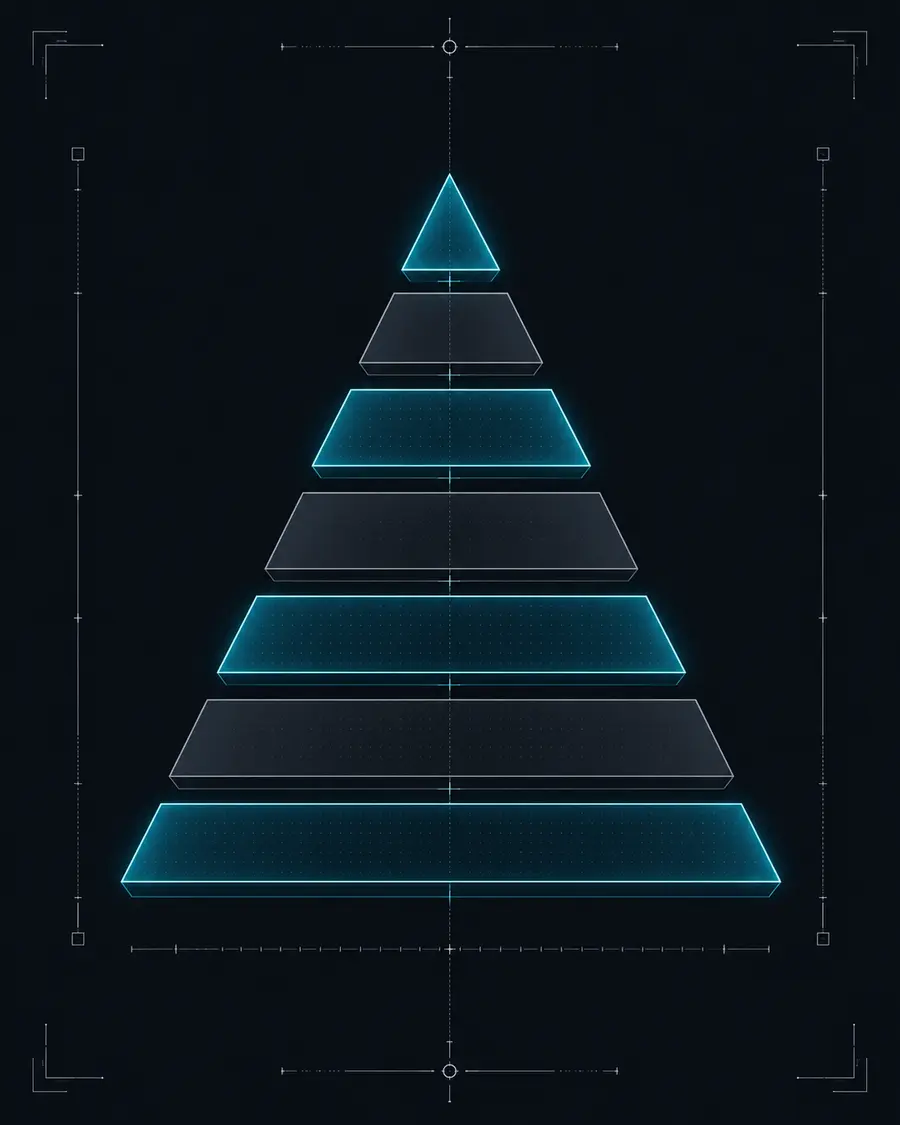
One framing rule before the tiers: your face is an output, not a fixed asset. Body fat percentage, hydration, sleep debt, posture, and grooming all feed the render. Guys rate themselves on a bloated, sleep-deprived, slouched version of their face and conclude the bones are the problem. You do not know what your actual baseline looks like until the foundation tiers are handled — which is exactly why they come first.
Tier 1 — Sleep & recovery WORKS
Sleep is ranked first not because it's the biggest single lever but because it multiplies every other tier. Under-sleeping raises cortisol and water retention (puffier face), tanks gym performance and recovery (slower recomposition), worsens skin barrier function, and darkens the periorbital area — the tired-eyes look no concealer fully fixes. There's also direct evidence on the social endpoint: in controlled studies, observers rated sleep-deprived people as less attractive and less healthy than the same people after normal sleep [1][2].
7–9 hours at a consistent time, phone out of reach 30 minutes before bed, room dark and cool. That's the entire protocol. It is free and it upgrades every tier above it.
Tier 2 — Body composition WORKS
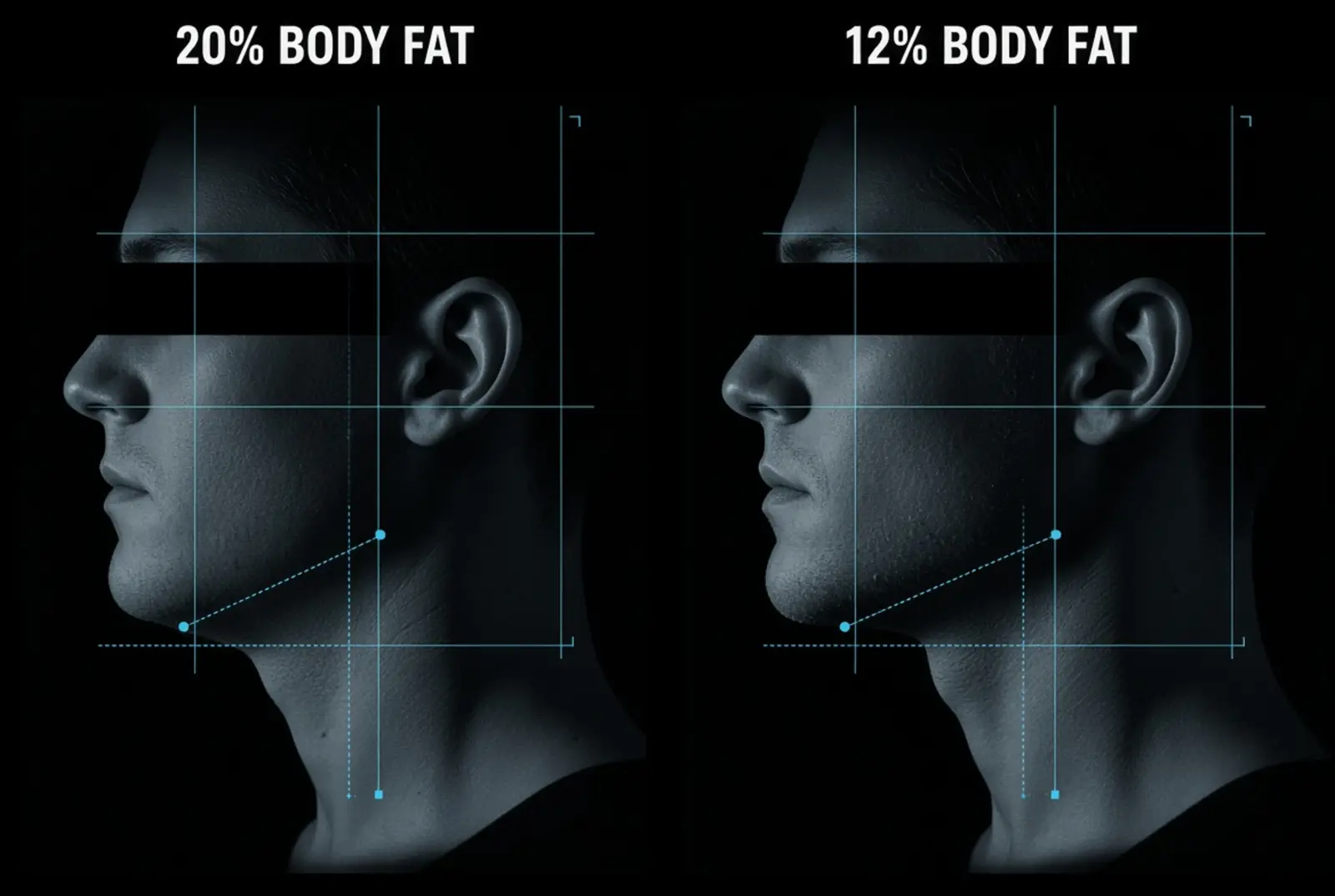
The jawline you're trying to unlock with gadgets and techniques is, for most guys, sitting under a layer of subcutaneous and facial fat. Facial adiposity tracks overall body fat, and studies consistently find facial adiposity is a significant predictor of attractiveness and perceived health ratings [3][4]. Drop from 25% to 12–15% body fat and your mandible border, cheek hollows, and neck angle change more than any non-surgical intervention on this list can deliver. Lifting matters too — a developed neck and shoulders change how the head sits on the frame — but the fat layer is the primary variable for facial definition.
This is also where the honest hard news lives: it takes months, not weeks. That's precisely why the shortcut industry exists, and why it doesn't work.
Moderate calorie deficit (300–500/day), 3–4 lifting sessions weekly, protein around 1.6–2.2g per kg of body weight — targets in line with sports-nutrition consensus [5]. For the short-term version of this lever, see the 14-Day Facial Debloat Protocol — water retention is the fast fraction of facial puffiness.
Where the line is: a moderate deficit down to a healthy body fat is the tool. Starvation-tier deficits, dry fasting for "facial definition," and extreme cuts are not looksmaxxing — they wreck sleep, hormones, gym output, and skin, which means they un-do four other tiers to feed one. If eating is becoming the thing you think about all day, that's the signal to get support, not to push harder.
Tier 3 — Skin WORKS
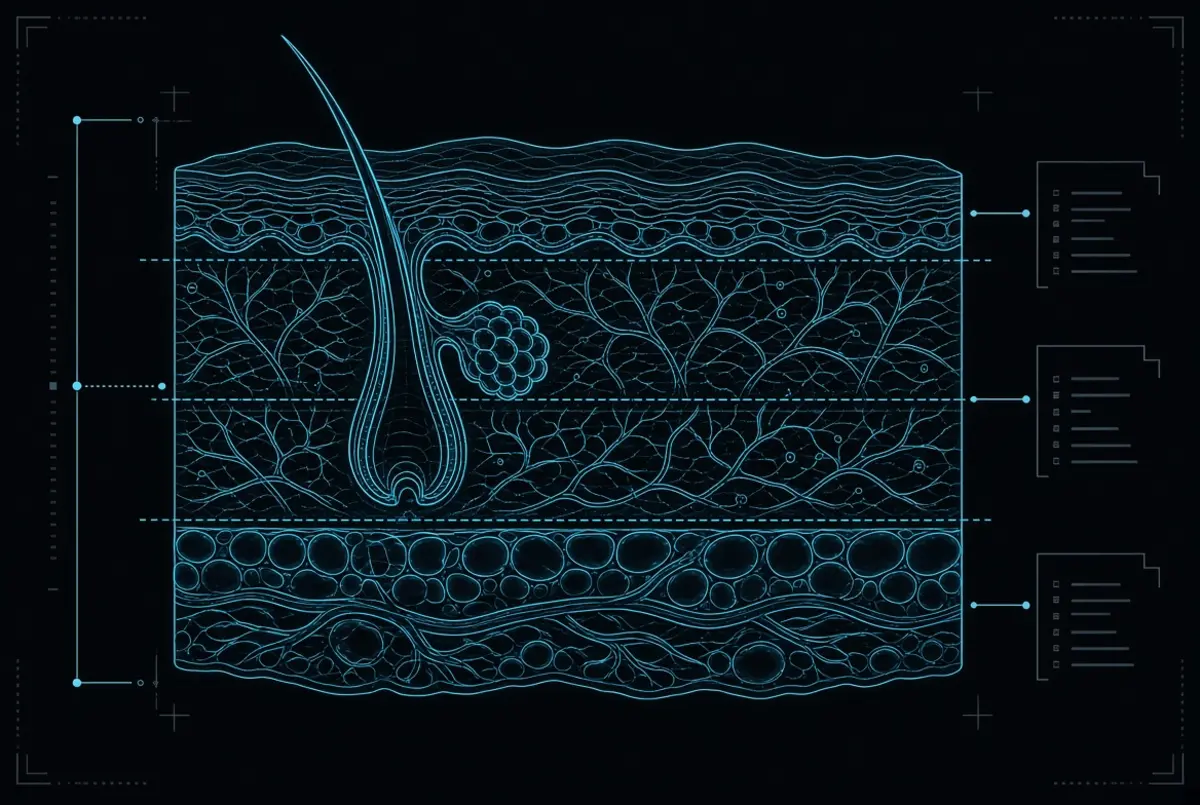
Clear, even skin is one of the most consistently-cited factors in facial attractiveness research — skin condition signals health, and raters respond to it strongly [6]. The good news: this tier is nearly solved by three products used consistently. Cleanser, moisturizer, sunscreen. Acne beyond mild? A dermatologist visit outperforms a $200 shelf of actives — adapalene is even available over the counter and has solid trial evidence behind it [7].
The trap in this tier is complexity worship. A 9-step routine you abandon in March loses to a 3-step routine you run for a decade. Full breakdown: The 3-Step Routine That Covers 80% — and if you're sunscreen-skeptical, we wrote the honest version of that conversation too: Is Sunscreen Actually Bad for You?
Gentle cleanser at night, moisturizer after, broad-spectrum SPF 30+ in the morning. Run it for 8 weeks before judging. Persistent acne → dermatologist, not more products.
Tier 4 — Hair & grooming WORKS
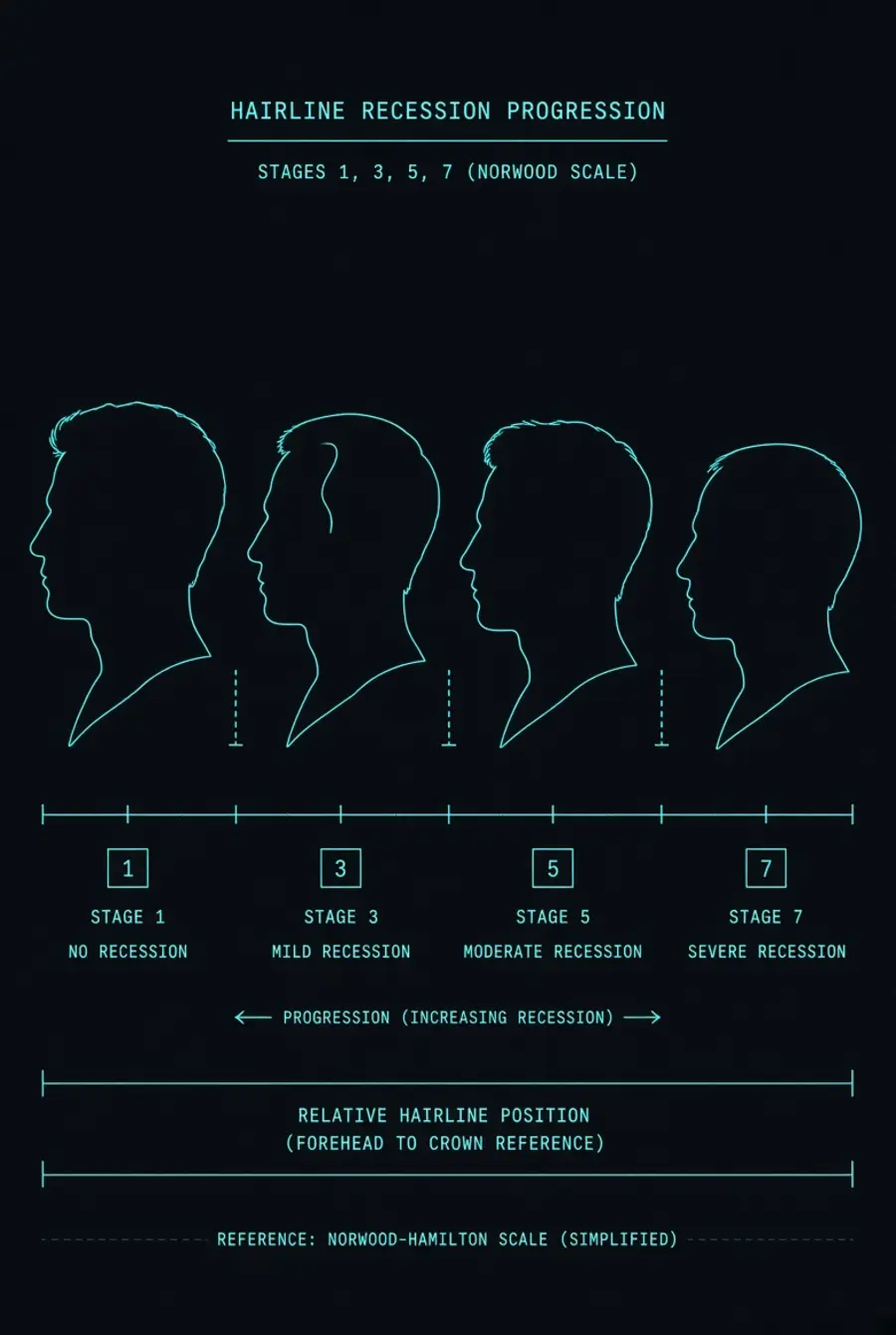
Your haircut is the frame around everything above the neck, and it's the fastest tier on this list — one good barber visit is a same-day upgrade. The rules are boring and effective: cut matched to face shape, maintained every 3–5 weeks, brows cleaned up (cleaned up, not sculpted), facial hair either committed-to or fully shaved — patchy indecision reads worse than either choice.
Hairline changes get their own guide because early detection and realistic treatment options are more useful than either reassurance or hype: Norwood Scale: Early Detection & What Actually Works. Short version — finasteride and minoxidil are the two interventions with real evidence [8], everything else in the shampoo aisle is rounding error, and the earlier you assess honestly, the more options you keep.
Book a barber (not a chain clipper mill), bring 2–3 reference photos for your face shape, ask what they'd change. Recheck brows and neckline every two weeks between cuts.
Tier 5 — Posture & presence WORKS
Nobody sees you the way your mirror selfie does — front-lit, chin angled, held still. They see you walking in, sitting, talking. Forward head posture shortens the visual neck, softens the jaw angle from every real-world viewing angle, and reads as low energy. Expansive, upright posture measurably changes how people are perceived and photographed. This tier costs nothing and pays out in every photo taken of you for the rest of your life.
Daily: chin tucks (2×10), doorway chest stretch (60s), and set your monitor to eye level. The habit trigger beats the exercise list — anchor it to something you already do daily.
Tier 6 — Style WORKS
Fit beats brand, and it isn't close. Clothes that actually fit your current body — shoulders seams on shoulders, taper that follows your build, correct length — make a $30 shirt outperform a $300 one worn baggy. Add a restrained color palette (2–3 base colors that suit your contrast level) and you've exited the bottom 70% of male dressing for under $200.
Try on everything you own; anything that doesn't fit your shoulders or is the wrong length leaves. Rebuild around 2 base colors. A tailor's $15 taper is the most underrated purchase in this entire article.
Tier 7 — The last 5% PARTIAL
Here's where mewing, jaw trainers, canthal tilt obsession, and surgical interventions live — the entire content economy of looksmaxxing, crammed into the smallest tier of actual returns. Some of it is real-but-modest, some is cope, some is dangerous:
- Mewing PARTIAL — proper tongue posture supports nasal breathing and resting face presentation; evidence for meaningful adult bone remodeling isn't there. Full analysis: Mewing: What the Evidence Actually Shows.
- Jawline exercisers COPE — minor masseter hypertrophy at best; TMJ aggravation is a real cost. The jawline you want is in Tiers 1–2.
- Bone smashing DANGEROUS — striking your face does not remodel bone into a desired shape; it risks fractures, nerve damage, and permanent asymmetry. The complete teardown, mechanism included: Bone Smashing: A Complete Teardown.
- Surgery & fillers — real interventions with real risk profiles, appropriate for a small minority who have already exhausted Tiers 1–6 and are making an adult, informed decision with a qualified surgeon. If you're under 25, on a bloated canvas, or haven't finished the foundation: you don't yet know what you'd even be correcting.
The order of operations
Run it bottom-up, stacked, not sequential — you don't finish sleep before starting skin. Week one you can have all of Tiers 1, 3, 4, and 5 running simultaneously for under an hour of total daily effort. Tier 2 is the long campaign running underneath. Tier 6 is one weekend. Tier 7 is a reading topic, not a to-do list, until everything else is handled — at which point most guys discover they no longer want it.
The uncomfortable, liberating math of this whole page: the tiers with the strongest evidence are the cheapest, the least glamorous, and completely under your control. Nobody's selling them to you because there's almost nothing to sell. That's how you know they're real.
If the mirror has become the enemy: there's a difference between working a checklist and being unable to stop checking. If appearance thoughts are intrusive, constant, or eating your mental health, that's body-image territory that no tier fixes — talking to a professional is the actual high-impact move, and it's more common in this community than anyone posts about.
Selected references
- Axelsson J, et al. "Beauty sleep: experimental study on the perceived health and attractiveness of sleep deprived people." BMJ. 2010;341:c6614.
- Sundelin T, et al. "Negative effects of restricted sleep on facial appearance and social appeal." Royal Society Open Science. 2017;4(5):160918.
- Coetzee V, et al. "Facial adiposity: a cue to health?" Perception. 2009;38(11):1700–1711.
- Rantala MJ, et al. "Adiposity, compared with masculinity, serves as a more valid cue to immunocompetence in human mate choice." Proceedings of the Royal Society B. 2013;280(1751).
- Morton RW, et al. "A systematic review, meta-analysis and meta-regression of the effect of protein supplementation on resistance training-induced gains in muscle mass and strength." British Journal of Sports Medicine. 2018;52(6):376–384.
- Jones AL, et al. "Facial cosmetics and attractiveness: comparing the effect sizes of professionally-applied cosmetics and identity." PLoS ONE / and skin condition literature incl. Fink B, et al. "Visible skin color distribution plays a role in the perception of age, attractiveness, and health in female faces." Evolution and Human Behavior. 2006;27(6):433–442.
- Eichenfield LF, et al. "Efficacy and safety of once-daily adapalene 0.1% gel." (OTC adapalene approval basis, FDA 2016.)
- Adil A, Godwin M. "The effectiveness of treatments for androgenetic alopecia: a systematic review and meta-analysis." Journal of the American Academy of Dermatology. 2017;77(1):136–141.